
How to safely introduce beekeeping at school
Key takeaways:
- Apiaries, or bee habitations, are becoming increasingly common in schools. It’s important that districts with apiaries create policies establishing clear rules.
- Parental permission is key for students who are participating in a beekeeping program. Parents or guardians need to indicate whether their child has a known bee allergy, so staff can be prepared.
- Even if students don’t have allergies, they should be kept safe from aggressive bees. This includes having proper protective equipment and learning how to gently manage bees.
Beekeeping can be an incredibly instructive and fulfilling addition to a school’s curricular or extracurricular program. However, administrators and lead staff members should be prepared to address all the risk control issues associated with having an apiary—a place that houses hives for honeybees.
Here, CM Regent risk control experts offer guidance on some of the key challenges surrounding apiaries.
Registration and inspection
The state of Pennsylvania requires that every beekeeper be registered. Pennsylvania’s Bee Law also dictates that apiaries undergo regular inspections to ensure the hives and equipment don’t have infectious or contagious diseases.
Any staff member who runs a beekeeping program at a school needs to be well versed in the science of apiaries. They should be knowledgeable about any state or local zoning ordinances that might restrict placement of apiaries and have a full understanding of safe beekeeping practices.
Managing allergies
Of course, one of the biggest risks with an apiary is the possibility of a student or staff member having an allergic reaction. Bee allergy reactions can range from mild symptoms, such as pain and swelling, to life-threatening anaphylaxis. The following are some best practices for avoiding the potential harm caused by bee allergies:
- Require permission forms for each student who will be entering the apiary. The forms should release the school from liability if the student is stung and indicate whether the student has a known bee allergy.
- If students with known allergies do enter the area, they should always have an epinephrine pen available. Additionally, a staff member trained to use an EpiPen should always be present. If an EpiPen is used that person should be taken to the emergency room.
- Staff members responsible for the storage and administration of epinephrine must successfully complete training approved by the Pennsylvania Department of Health. At a minimum, this training should be provided at least every two years. Other states may have similar requirements.
- Always keep an EpiPen on-site. There should be a staff member designated to periodically check if the medication has expired.
Keeping students and staff safe from aggressive bees
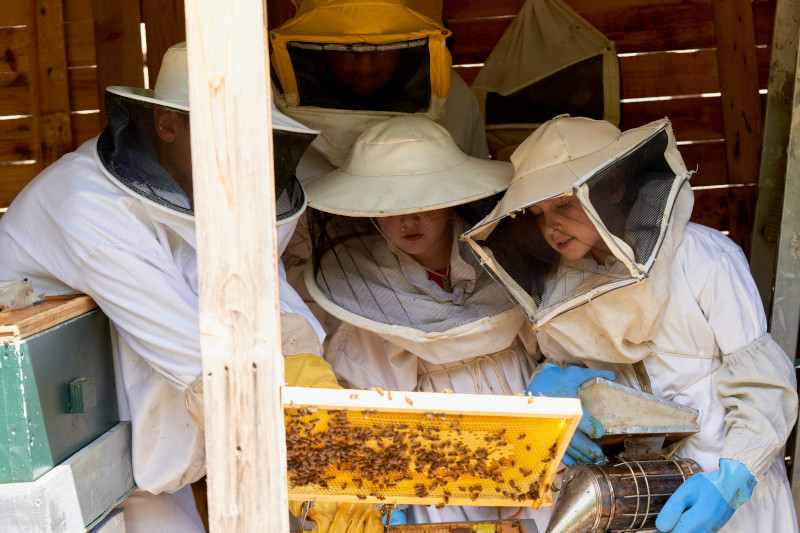
Every good beekeeper knows they should only approach bees when wearing personal protective equipment (PPE). A school that runs an apiary should establish a policy that requires all students and staff to be properly dressed and handle bees carefully.
This policy needs to include the following rules for working in the apiary:
- Wear a full bee suit with a veil, and ensure there are no gaps between gloves, sleeves and pants.
- Move slowly and gently to avoid agitating or crushing bees. When bees are crushed, they release pheromones that trigger more stings.
- Use a properly lit smoker to calm the bees and lessen the risk of aggressive behavior.
Additionally, schools need to take special care to place hives at least 150 feet away from high-traffic areas in the school. This includes playgrounds, sports fields and other spots where students congregate.
Responding to bee stings
Even for students who are not allergic to bees, bee stings are still a major risk of running an apiary. Schools should include in their policy the proper treatment for a bee sting:
- Immediately scrape out the stinger with a fingernail or card, not tweezers.
- Wash with soap and water.
- Apply a cold pack for 15-20 minutes.
- Keep the affected limb raised to reduce swelling.
- If the student’s parent or guardian has given permission for over-the-counter medications, ibuprofen or acetaminophen may provide some relief.
If a school prepares appropriately, an apiary can be an educational addition to the property.
Check out additional student and activity risk management information here.
Q&A about apiaries in schools
Q: Why must school apiaries be registered and inspected?
A: Registration and inspections help ensure hives are free of contagious diseases and comply with state laws and local zoning rules.
Q: How can schools manage the risk of bee allergies?
A: Require permission forms, keep EpiPens on-site, and ensure trained staff are present to respond to allergic reactions.
Q: How can schools prevent aggressive bee behavior?
A: Require protective gear, move slowly around bees, use smokers to calm hives and place hives away from busy areas.
Q: What should be done if someone gets stung?
A: Remove the stinger, wash the area, apply a cold pack and use pain relief if permitted.