Kitchen utilities on wheels
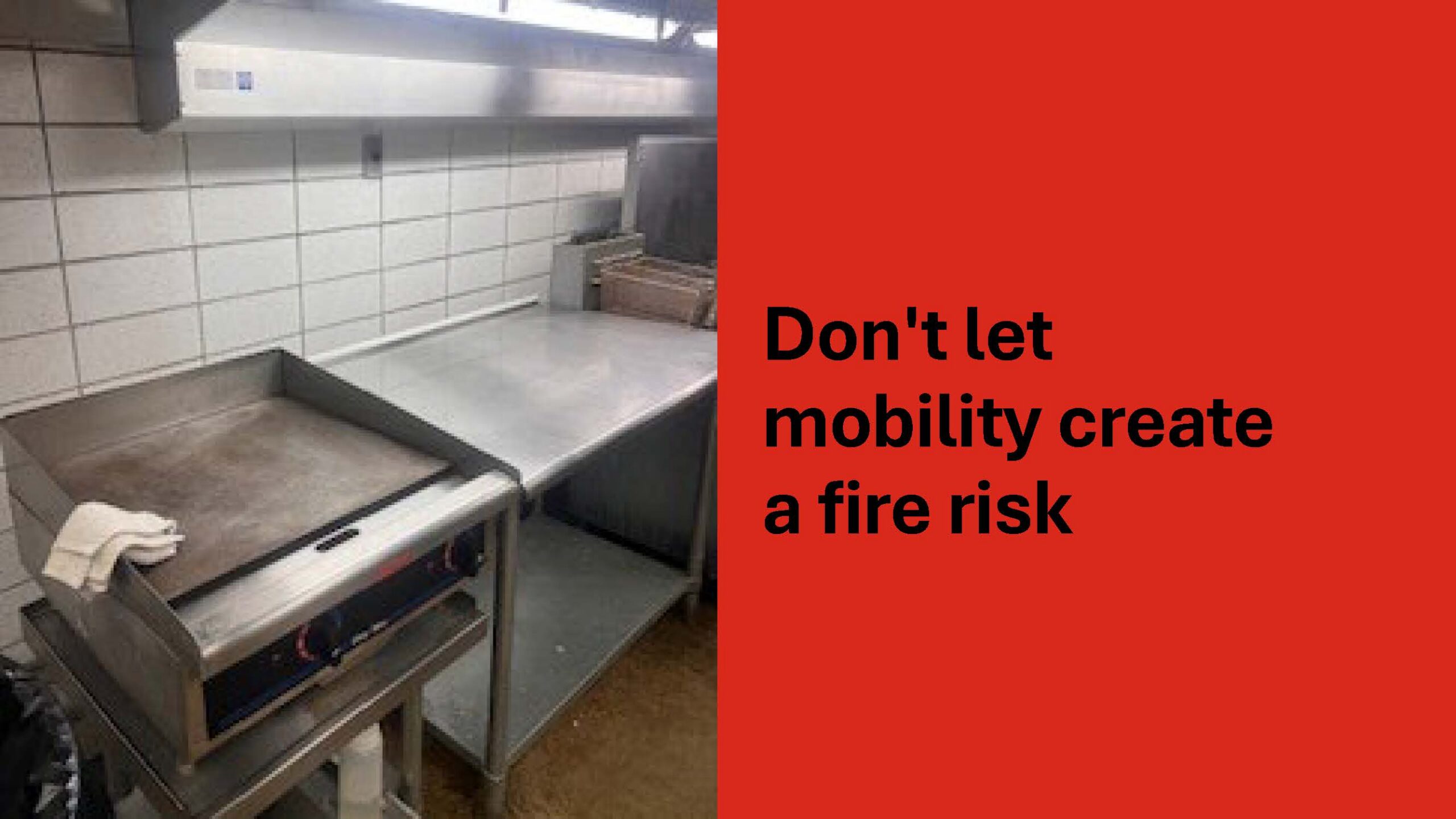
Key Takeaways
- Keep mobile cooking equipment beneath the appropriate automatic suppression-system nozzles. When you move equipment, you can put it outside the system’s intended protection area.
- Use breakaway gas valves on movable gas-fired equipment. If equipment is pulled away and the gas hose disconnects, the valve can automatically stop the flow of gas.
- Build equipment movement into your kitchen safety procedures. Employees should know what can be moved, where equipment belongs and what to do before reconnecting or operating it.
School kitchens are built to keep meals moving. But sometimes, the equipment moves, too.
Mobile ovens, ranges, grills and other kitchen utilities can give food service operations valuable flexibility. Equipment may be moved for cleaning, maintenance, storage or changes to the kitchen layout. That flexibility, however, can introduce a fire risk that school leaders may not immediately consider.
Keep equipment under the suppression nozzles
Automatic kitchen extinguishing systems are an important line of defense against cooking fires. They’re specifically designed to detect and suppress fires involving high-temperature cooking equipment and flammable oils and grease.
But these systems do not protect every possible location in a kitchen. The system’s nozzles are positioned to provide coverage for specific equipment and hazard areas. If a mobile appliance is moved away from its designated location, it could potentially end up outside that coverage.
Consider an employee who rolls a piece of cooking equipment several feet away from its normal position to clean behind it. If the equipment is operated before being returned to its designated location, a fire could occur in an area the suppression system wasn’t designed to protect.
That’s why schools should establish a simple rule: Mobile cooking equipment needs to remain in its designated operating position and beneath the appropriate suppression-system nozzles when in use.
If equipment is replaced, relocated or added to a kitchen, don’t assume the existing suppression system still provides adequate protection. Have a qualified fire protection professional evaluate the configuration and determine whether nozzle locations or the system itself need to be adjusted.
This is especially important for equipment that produces grease-laden vapors, including deep fryers, ranges, grills, broilers and similar cooking appliances.
Disconnected gas hoses
Fire protection isn’t the only concern when gas-fired equipment is on wheels. Imagine an employee pulling a mobile appliance away from the wall. The movement puts tension on the gas hose, and eventually the hose disconnects from the gas line.
What happens next? Without an appropriate safety device, gas could potentially continue to flow from the disconnected line. This creates a fuel source that could contribute to a fire or explosion if an ignition source is present.
Breakaway gas valves can provide an important layer of protection. These valves are designed to sense when the hose separates from the gas connection and automatically shut off the gas supply.
In other words, if someone unintentionally pulls the equipment far enough to disconnect the hose, the valve can stop the gas from continuing to flow.
School leaders should work with qualified professionals to determine whether breakaway gas valves are appropriate for their mobile gas-fired equipment, and to ensure they are correctly installed, inspected and maintained.
Employees should also be trained not to rely on the valve as permission to move equipment while connected. Proper procedures for moving, connecting and disconnecting gas-fired appliances remain essential.
Automatic suppression systems
An automatic suppression system is an important safeguard — but it isn’t a substitute for prevention.
NFPA 96 calls for regular inspection and maintenance of automatic extinguishing systems, including inspections at six-month intervals. School leaders should make sure those inspections are completed and identified deficiencies are addressed promptly.
Manual pull stations also should remain accessible and unobstructed. Kitchen employees should know where they are located and understand how to activate the system in an emergency.
Risk anticipation
Risk management often comes down to anticipating what could happen before it happens.
School leaders can work with food service supervisors, maintenance personnel and safety committees to establish procedures for mobile kitchen equipment. Consider addressing questions such as:
- Which pieces of equipment are designed to be moved?
- Where should each appliance be positioned when operating?
- How should gas-fired equipment be disconnected before moving?
- Are breakaway gas valves installed where appropriate?
- What should employees do if a gas hose disconnects?
- Are suppression nozzles positioned to protect the equipment?
- Who should be contacted before equipment is relocated or replaced?
- Are employees trained on the location and operation of manual suppression-system pull stations?
These procedures don’t have to be complicated. The important thing is that employees understand the expectations and know what to do.
Protecting a mobile kitchen
A kitchen fire can quickly become more than a food service problem. An uncontrolled fire can injure employees, damage equipment and facilities, interrupt meal service and potentially force a school or other facility to close while repairs are completed.
Automatic suppression systems provide critical protection when a cooking fire occurs. But that protection depends on proper design, installation, inspection and use.
For school leaders, mobile kitchen equipment deserves a place on the risk-management checklist. Make sure equipment stays beneath the appropriate suppression nozzles. Consider breakaway gas valves for movable gas-fired appliances. Use the locking mechanism on the wheels of equipment after it is moved and especially when it is returned to its intended location. Train employees on safe equipment movement and emergency procedures. And involve qualified professionals whenever equipment or kitchen configurations change.
A few preventive steps can help keep a convenient feature — kitchen equipment on wheels — from becoming an unexpected source of risk.
Find more kitchen safety resources here.
Q&A
Q: Why must mobile equipment stay beneath suppression nozzles?
A: Moving equipment can place it outside the system’s intended fire-protection coverage.
Q: What does a breakaway gas valve do?
A: It automatically shuts off the gas if the hose disconnects from the gas line.
Q: Can employees move gas-fired equipment while connected?
A: No. Follow procedures for safely disconnecting equipment before moving it.
Q: What if kitchen equipment is replaced or relocated?
A: Have a qualified fire protection professional review the suppression system’s coverage.